 docs.healthdata.be
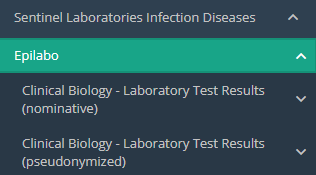
The information below contains the Data Collection Definition (DCD) specifications of the project Epilabo. It is a detailed description of the content of two registries:
- the DCD used for the nominative dataflow for test results from patients residing in the Walloon / Brussels Capital region, data will be transmitted to the regional health authorities (AVIQ and Vivalis) in the context of the mandatory notifiable infectious diseases.
- the DCD used for the pseudonomized dataflow for test results from patients residing in Flanders.
In terms of data reporting the fields and code lists to be extracted and sent are exactly the same for both DCDs. This will allow the data provider to extract the data only once. Subsequently, the data need to be split based on the postal code of the patient's residence in 2 data sets according to the regions: Flemish region versus the Walloon / Brussels Capital region. The list of the postal codes and their relation to the regions can be downloaded below:
Finally, the obtained data sets can either be sent via the nominative dataflow for the dataset for the Walloon / Brussels Capital region or the pseudonomized dataflow for the data set for the Flemish region.
(Links to new DCD specifications to be published on the FAIR portal will be added below)
- HD_DCD_SPEC_HDBP0037_EPILABO_CB_MO_NOM_v1.4.0.xlsx
- HD_DCD_SPEC_HDBP0037_EPILABO_CB_MO_PSEUD_v1.3.0.xlsx
with hd, settings, survey, choices (including general code lists) change log ... These specifications were used to build the forms, csv's, and API's for this project, which you also can find in this project manual. Go here for a detailed guide to the XLSForm standard.
In addition to this, more detailed information about the codes and the formats used for the Author group, SSIN code, status, Postal Code, "Date" - "Date:Time", repeatable fields and multiple choice fields is available here.
Additional Epilabo-specific information
- In addition to the DCD specifications you can download the test codes mapping table below. This table is used to map the test codes (Loinc codes) linked to the Pathogen (Snomed codes), Test method (Snomed codes) and Sample type fields (Snomed codes).
- Codes to be selected in case of missing information
In case of missing information (i.e. confidentiality of patient information for sexual transmitted diseases) for a required field, a “dummy” value needs to be entered. This allows the submission of the record without error message. A “dummy” code can be proposed to ensure consistency of the reporting field. See 'hint:English' column in the 'Survey' sheet of the XLSForm.
| Required field | Example | Dummy code |
|---|---|---|
| Date | Date of birth | 01/01/1900 |
| Date:time | Date and time of test result | 01/01/1900:00:00:00 |
| Text | Patient name | NA |
- Codes to be selected in case of viral or bacterial culture
In case the field 'LaboratoryTestResult_LaboratoryTest_TestCode' is filled out with the code for a culture test = 11475-1: Microorganism identified in Specimen by Culture, then a pathogen SNOMED code from the 'qualifier_835 code list' needs to be entered in the field 'LaboratoryTestResult_LaboratoryTest_TestResultCodeableConcept'.
In all other cases, the codes "detected" or "inconclusive" or "Not detected" should be selected. See 'hint:English' column in the 'Survey' sheet of the XLSForm.
- Selection of the NIHDI codes from laboratories
In the frame of this Epilabo registry, the values for the HCO_LAB_CBE codelist should only contain the recognized laboratories by NIHDI. Therefore, the 8-digit NIHDI ID’s should be selected, not the 10-digit CBE codes.
This documentation is being updated regularly. We try to provide as correct, complete and clear as possible information on these pages. Nevertheless, if you see anything in the documentation that is not correct, does not match your experience or requires further clarification, please create a support ticket via our portal (https://healthdatabe.atlassian.net/servicedesk/customer/portals) or send us an e-mail via support.healthdata@sciensano.be to report this documentation issue. Please, do not forget to mention the URL or web address of the page with the documentation issue. We will then adjust the documentation as soon as possible. Thank you!